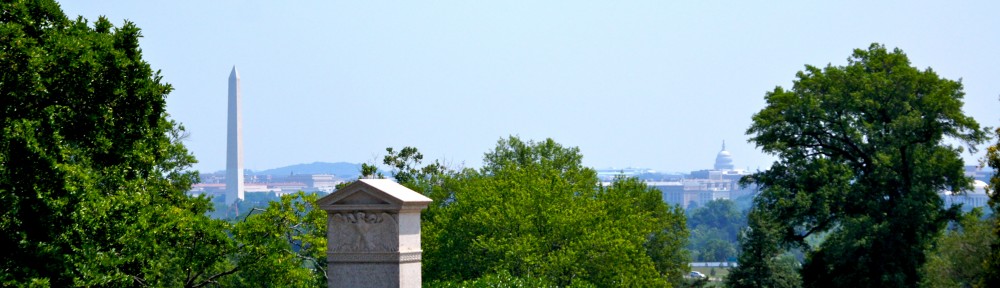
It was 235 years ago this day that a fractious group of politicians and leaders joined together in the virtually unprecedented act of declaring independence from their mother country. Happy Birthday, America!
Author Archives: Jamie Rawson
An Enduring Mystery
It was on 2 July 1937 that famed aviatrix* Amelia Earhart and her navigator, Fred Noonan, made their final radio contact during their attempt to circumnavigate the globe along the Equator. Earhart and Noonan had departed from Lae, New Guinea on their way to tiny Howland Island, just north of the Equator (it lies at at 0 degrees 48 minutes North, 176 degrees 38 minutes West, almost exactly halfway between Lae and Honolulu, Hawaii.) Their aircraft was a Lockheed L-10E Electra, a twin-engine plane and Lockheed’s first to feature all-metal construction.
Amelia Earhart had a number of aviation firsts to her credit: she was the first woman to fly across the Atlantic (a year after Charles Lindbergh’s renowned solo crossing) and later became the first woman to make the crossing as a solo flight, a feat for which she was awarded The Distinguished Flying Cross. Garbed in heavy, unisex flight gear, Earhart bore an uncanny resemblance to Charles Lindbergh, and the popular press gave her the nickname “The Lady Lindy,” which enhanced her image. She was also the first person to make a solo flight from Honolulu, Hawaii to Oakland, California, and she held several aviation speed records. By 1937 Amelia Earhart was not only a celebrity but a genuine national hero. Her attempt to circle the globe was eagerly followed in the international press.
The round-the-world flight was not to be the first. That had been accomplished earlier, but it was to have been the first equatorial circumnavigation of the globe. Though it was promoted as a scientific mission, little hard science was actually performed during the journey, and it seems that it was designed to create publicity as much as anything else. Earhart had taken a position at Purdue University in 1935 as a counselor on careers for women, and it was Purdue which funded the purchase of her L-10E.
Earhart and Noonan’s final transmission indicated that they were low on fuel and that they believed they were at the charted position for Howland Island. The United States Coast Guard cutter Itasca, stationed at Howland Island in support of a tiny settlement that had been established there, was monitoring communications from the Electra, but there were several difficulties, including Earhart’s tactic of changing transmission frequencies periodically. Other radio posts along Earhart’s flightline may have received additional transmissions as well. But Earhart and Noonan never made it to Howland Island and safety.
The disappearance sparked what was then the largest and costliest search and rescue mission in history, but no trace of the Electra nor of Earhart or Noonan has ever been positively identified. As is inevitable in the case of a celebrity vanishing, many speculations, legends, rumors, and fictions have sprung up to explain Earhart’s disappearance: some claim she and Noonan were captured by the Japanese who were fearful of American espionage attempts, others offer the theory that Earhart engineered her disappearance so that she and Noonan could start a new life together under new identities. No tale is too fanciful or too far-fetched to be posited. Yet there is to this day considerable serious and scholarly inquiry as well.
The sudden and complete disappearance of Amelia Earhart and Frank Noonan remains fascinating because it remains unexplained and unresolved. Surely it cannot help matters that U.S. government documents concerning Earhart and her disappearance remain classified.
Jamie Rawson
Dallas, Texas
Adventure is worthwhile in itself.
— Amelia Earhart
*”Aviatrix,” the feminine form of “aviator,” is no longer used these days, but it somehow seems just the right word to invoke the image and impact of Amelia Earhart in her times: girded in a streaming silk scarf and flying goggles, staking her claim in the overwhelmingly male-dominated world of flight.
Happy Canada Day!
Today marks 144 years of Canadian Autonomy!
On 1 July 1867, the British North America Act went into effect, granting Canada its virtual independence (with a few strings attached.)
The Brits, having learned from the bitter pill of American independence, decided that their other North American holdings would be better managed from within as an autonomous part of the British Empire and Commonwealth (in large part, they didn’t want the trauma of being forcibly deprived of another of their North American holdings, either by internal revolt, or by outright conquest by the US, who had a very large, very experienced, and very well-equipped military machine at hand in the wake of the ending of the Civil War.) Throughout the early 1860’s, there had been growing sentiment and agitation within Canada for greater autonomy, and for once such a radical result was achieved without revoltion or warfare.
It is worth noting that what constituted Canada in 1867 was not completely what we know as Canada today; not all of Britain’s colonial holdings in North America joined in at the start. The West and some of the maritimes joined in during the 1870’s and 1880’s. In fact, the last part of Canada to join in, Labrador, did so in 1949!
So Happy Canada Day to our northern neighbors. Sometimes great things can be accomplished reasonably peacefully!
Jamie Rawson
There already is a kinder, gentler America. It’s called Canada.
– Margaret Atwood
The Power Of Snake Oil …
It was exactly 105 years ago this day, on 30 June 1906, that Congress passed the Pure Food And Drug Act, ensuring that food and drugs bought and sold in the United States would be safe, sound, and unadulterated, and that claims made about food or drugs could be substantiated.
For 88 years, from the passage of the Pure Food and Drug Act in 1906, and continuing with the Food, Drug, and Cosmetic Act of 1938, up to the Dietary Supplement Act of 1994, Americans could be confident that their food was safe and that their medicines were effective, and that not only outright lies, but also false, misrepresented, or misleading claims were not permitted in the advertising of food or drugs. Of course, this is not to say that no advertisers ever misled the public; look at the tobacco industry as a case in point. Nevertheless, Americans had confidence that the food and drugs they bought were substantially what they claimed to be, worked as they claimed to work, and contained what they claimed to contain.
Until the late 1800’s, no one really had a clear understanding of how or why some medicines worked. For example, Tincture of Quinine was clearly effective against malaria, but it was not until the Nineteenth Century that anyone even had a guess as to why. So, in the absence of scientific understanding, most anything was tried and many compounds ranging from the ineffectual to the deadly were sold as Patent Medicines.
By the beginning of the twentieth century, scientific knowledge had advanced to the stage where it no longer made sense to allow every compound to be sold as medicinal. Too many patent frauds were being sold as Patent Medicines. And at the same time, the need to guarantee a healthful, safe food supply was evident: manufacturers had been selling food such as a sweet, sugary, artificially dyed and flavored jelly as “strawberry jam.” To add realism, they had included tiny grass seed. But that was not as bad as canned peas being greened up with poisonous copper salts. Processed meat was often spoiled or tainted with rodent contamination (read Upton Sinclair’s The Jungle for a truly unpalatable look into early 20th Century meat processing.) Clearly the consumer could not rely on the quality or safety of what was being sold, and the consumer had no means of testing or verifying that certain foods were safe or healthful.
Congress took action with the Pure Food and Drug Act, a landmark in modern legislation. Americans could rightly have confidence in the foodstuffs they ate and the drugs they took. Thus, now, after more than three generations of this confidence, Americans still suppose that “they couldn’t advertise that if it wasn’t so.” The pigeons have been primed for the harvest. The Dietary Supplement Act of 1994 greatly lowered the bar on the claims and assertions that may be advertised for dietary supplements. It also requires the FDA to prove that a supplement is harmful in order to restrict it, rather than requiring that a supplement be shown to be effective or at least harmless. Section 4 of the 1994 act states:
In any proceeding under this subparagraph, the United States shall bear the burden of proof on each element to show that a dietary supplement is adulterated. The court shall decide any issue under this paragraph on a de novo basis.
The Dietary Supplement Act provides that almost any claims may be made for a supplement so long as the statement includes:
“This statement has not been evaluated by the Food and Drug Administration. This product is not intended to diagnose, treat, cure, or prevent any disease.”
One can see commercial after commercial about “wonder supplements” for a variety of quite specifically identified diseases, yet – bizarrely – the apparently contradictory proviso exonerates the advertiser of all liability. We are therefore subjected to advertising which essentially says: “Take ‘Cactus Squeeze’ for your heart (we don’t really mean for your heart!)” Or: “Use ‘Extract of Spanish Moss Blossoms’ for your prostate health (just kidding about the prostate.)”
Companies that lie in their advertisements may still be fined or sued, but the supplement business is mercurial: new firms spring up as old ones get shut down. These days our airwaves, print media, and internet are filled with inane and potentially harmful claims for dubious supplements. To the protean nature of these supplement sellers, add the fact that Congress has routinely refused to provide funding to support adequate numbers of inspectors and evaluators for the FDA, and we really have a hard time knowing just what we are ingesting these days. That seems poor progress after more than a century’s passage.
It is not at all likely that new legislation will address this ludicrous state of affairs. There is simply too much advertising revenue to be made from Snake Oil, and too many palms are crossed with the profits from exploiting the trusting ignorance of the American public. But I would close with an old and important word to the wise: if a product sounds too good to be true, it is. Do not rely upon the notion that “they couldn’t advertise that if it wasn’t so.” They can. They do.
Happy Birthday, Pure Food and Drug Act! And rest in peace. You are sorely missed.
– Jamie Rawson